
Well-being
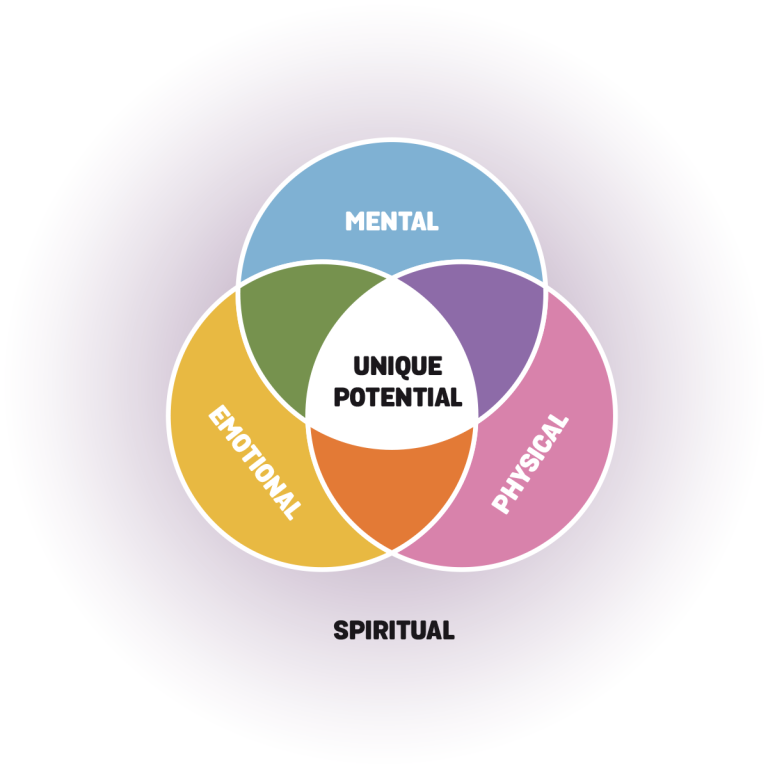
Well-being is realising one’s unique potential through physical, emotional, mental, and spiritual development in relation to self, others, and the environment.
Our definition of well-being acknowledges the complexity of the world around the person, but also inside the person.
Core Capacities
Based on decades of exploration and practice with individuals and groups, we identified nine core capacities that help us deepen our relationship with ourselves, others and the environment.
We consider core capacities as distinct cornerstones of life skills and competences. The differences between them include a process-orientation and a focus on natural and individualised preferences explored through practice.
Each capacity can be understood through physical, emotional, mental and spiritual perspectives

Inquiring
Power to seek what can expand knowledge and action

Reflecting
Power to offer another view

Sensing
Power to know something that is not visible

Empathizing
Power to know (see and feel) with and through others

Discerning Patterns
Power to connect to the whole, and its parts

Embodying
Power to relate to the body as a source of knowing
Principles
From the framework, we have devised the following principles for action which we offer as a common language to guide children, adults and institutions in creating together environments that place well-being at the heart of all their endeavours.
- Wholeness: Cultivate expressions of wholeness in people, communities and societies: creating environments for physical, emotional, mental and spiritual development through the practice of core capacities.
- Purpose: Allow the unfolding of unique potential in individuals and communities: nurturing behaviours’ that provide purpose, meaning and direction in every activity.
- Diversity: Respect individual uniqueness and diversity: encouraging diverse perspectives and multiple expressions.
- Relationships: Emphasise the quality of relationships: focusing on process and seeing the other as a competent partner.
- Participation: Support the active participation of those concerned, involving everyone in decisions that impact them.
- Systems: Recognise nested systems as influencing one another: providing opportunities for different sectors and disciplines to work together.
- Feedback: Ensure conditions for feedback and self-organisation: measuring what matters for the well-being and sustainability of any system.


